








OwlTing Market Brief ⎯ Building Stablecoin Infrastructure for the Future
Editorial Note
Financial services and technology are evolving fast, and the signals that matter most are often buried in noise. At OwlTing, we believe the future of payments will be shaped by two pillars: regulation and real-world use.
With this in mind, we are launching “OwlTing Market Brief” Curated by OwlTing’s PR and IR teams. This series will focus on how tokenized assets, on-chain settlement, and stablecoin infrastructure are reshaping global finance, from regulatory frameworks to payment rails and business models.
Our first issue starts from two global signals: The first is S&P Global Market Intelligence, “Coverage Initiation: OwlPay eyes a piece of the US stablecoin boom,” in which S&P Global, for the first time, proactively initiating coverage on OwlPay and positioning us within the US stablecoin infrastructure landscape. The second is the shift by Vanguard, a major asset manager long known for its highly conservative stance toward virtual assets. Vanguard has quietly become a major institutional shareholders of Strategy, a Bitcoin-focused company (formerly MicroStrategy), and also opened access to virtual-asset ETFs for its clients.
Taken together, they point to the same direction: within a compliant framework, tokenization and stablecoin rails are moving from the edge of the market into the core of cross-border and institutional settlement. That’s the journey this newsletter will keep following.
S&P Global Highlights OwlTing
Inside the three pillars S&P uses to evaluate next-generation payment infrastructure.
According to Visa Onchain Analytics, stablecoin transaction volume passed $11 trillion in 2025 [1], a record high. Regulators from Europe (MiCA) to the U.S. (GENIUS Act) and Asia are all moving in the same direction: bringing stablecoins into formal payment and settlement networks. Stablecoins are rapidly becoming real financial infrastructure, with settlement in seconds and costs in some cases down to one-tenth of traditional rails.
For businesses, the question is no longer just whether to use stablecoins, but which rails are compliant, resilient, and connected to fiat. Relying on unregulated providers or weak fiat links means that one regulatory change or a bank exit can halt operations. In this phase, for service provider, pure tech is not enough; regulatory footprint and integration with existing financial systems are the real moat.
In Q4 2025, S&P Global Market Intelligence released “Coverage Initiation: OwlPay eyes a piece of the US stablecoin boom,” breaking down what makes a stablecoin settlement infrastructure viable for global use. S&P highlights three structural elements: the regulatory footprint that determines where the system can legally operate, the ecosystem connectivity to card networks, remittance partners, chains, and commerce platforms, and the flexibility of the product architecture to support multiple settlement scenarios.
Within this framework, S&P highlights OwlPay as a representative case: operating applicable U.S. state regulatory frameworks in 36 U.S. states at the time of research (now 40 U.S. States), and gradually forming a vertically integrated payment stack. This ecosystem spans multiple nodes, including Card Networks (Visa), Global Remittance Rails (MoneyGram), Blockchain Protocols (Stellar), Commerce Platforms (Shopify), bringing stablecoin settlement into real business use cases.
This ecosystem architecture gives OwlPay a clear role: a compliance and settlement engine at the core, a wallet layer managing treasury and risk, and merchant-facing tools that let enterprises add stablecoin settlement without changing their existing workflows.
In this race, players are starting to meet in the same lane. Stripe (via Bridge) leans on its developer and merchant base to make stablecoins an extension of existing payments. BVNK focuses on B2B treasury and large-value flows. Zero Hash offers regulated “crypto-as-a-service” APIs for fiat–stablecoin conversion, custody, and transfers. S&P positions OwlPay as an infrastructure provider that combines compliance, a strong partner network, and a flexible stack, with a dual strategy: deep API integration for enterprises and plug-and-play tools for merchants, all on the same rails.
Darren Wang, Founder and CEO at OwlTing Group, notes that from SWIFT to third-party processors, payments have long been fragmented, forcing companies to juggle multiple providers for cross-border flows. With stablecoins and tokenized settlement rewriting the rules, OwlPay is designed so collection, FX, clearing, and payout can all run on a single compliant infrastructure.
Sampath Sharma Nariyanuri, CFA, senior analyst at S&P Global Market Intelligence, concludes that where competitors often lean heavily toward either developer-focused APIs or merchant-facing tools, OwlPay runs both playbooks in parallel. Within a short span, the company has bolstered regulatory credentials in the US and assembled a partner network that includes Visa Inc., MoneyGram, Stellar and Shopify Inc. As stablecoins move from niche crypto use cases into mainstream commerce, OwlPay can grow organically by scaling its infrastructure and deepening vertical penetration. But the company also fits an inorganic growth path. Its tech, licenses and partner network could make it an attractive acquisition target for traditional payment giants seeking a fast track into stablecoin rails.
From an industry view, stablecoin infrastructure is now a mature track; the real edge will be who can minimize “compatibility cost” between traditional finance and digital assets.
The above reflects S&P’s analysis and our general interpretation. It is for informational purposes only and does not constitute any prediction or guarantee of future performance.
This S&P Global Market Intelligence report, “Coverage Initiation: OwlPay eyes a piece of the US stablecoin boom,” is an independently produced research publication. It is not a paid collaboration nor a commissioned study.
The report was published as part of S&P’s syndicated subscription research service and is owned exclusively by S&P.
1. According to Visa Onchain Analytics, adjusted stablecoin transaction volume reached USD 11 trillion in 2025. This figure excludes internal transfers, bots, and non-economic activity, providing a closer reflection of real economic usage. More details: https://visaonchainanalytics.com/transactions
A Cautious Fund House Opens the Crypto Door
What Does Vanguard’s Shift Really Signal?
Vanguard, the world’s second-largest asset manager with USD 11 trillion in asset under management and over 50 million investors, is known for low-cost index investing and has long maintained a highly conservative stance toward crypto.
That wall is starting to crack. Via its index funds, Vanguard has become one of the largest institutional shareholders of the Bitcoin-focused company Strategy (ex-MicroStrategy), holding nearly 20 million shares, around 7.4%. On the other, it has begun allowing U.S. brokerage clients to trade a selection of regulated crypto ETFs and funds (Bitcoin, Ethereum, XRP, Solana, etc.).
For the broader blockchain and digital asset ecosystem, this move matters as a signal: when a highly conservative institution like Vanguard starts to accept virtual assets, it signals that mainstream finance increasingly recognizes tokenized assets, on-chain settlement, and T+0 / near-instant clearing as future building blocks of capital markets and fund operations. But the conditions are strict. Vanguard’s opening is confined to regulated ETFs, excluding memecoins and other highly speculative instruments. Traditional institutions may be willing to “open the door,” but only to assets that sit inside regulated, controllable structures.
Any stablecoin issuer, wallet, or payment provider that wants to work with institutions like Vanguard will need AML/KYC, on-chain monitoring, capital strength, and resilience that match traditional banks. This isn’t a blanket endorsement of crypto; it’s a bigger stage only for those building real financial infrastructure, and fewer players will qualify to stay on it.
Safe Harbor Statement: The above is for market and regulatory insight only and does not constitute advice or a recommendation for any security or investment product.
About OwlTing Group
NASDAQ: OWLS
OBOOK Holdings Inc. is a blockchain technology company operating as the OwlTing Group.
The Company was founded and is headquartered in Taiwan, with subsidiaries in the United States, Japan, Poland, Singapore, Hong Kong, Thailand, and Malaysia. The Company operates a diversified ecosystem across payments, hospitality, and e-commerce.
In 2025, according to CB Insights’ Stablecoin Market Map, OwlTing was ranked among the top 2 global players in the “Enterprise & B2B” category.
The Company’s mission is to use blockchain technology to provide businesses with more reliable and transparent data management, to reinvent global flow of funds for businesses and consumers and to lead the digital transformation of business operations.
To this end, the Company introduced OwlPay, a Web2 and Web3 hybrid payment solution, to empower global businesses to operate confidently in the expanding stablecoin economy.
For more information, visit https://www.owlting.com/portal/?lang=en
Media Contact
OwlTing Group, PR Team
Certain statements in this announcement are forward-looking statements. These forward-looking statements involve known and unknown risks and uncertainties and are based on the Company’s current expectations and projections about future events that the Company believes may affect its financial condition, results of operations, business strategy, and financial needs. Investors can identify these forward-looking statements by words or phrases such as “may,” “could,” “will,” “should,” “would,” “expect,” “plan,” “aim,” “intend,” “anticipate,” “believe,” “estimate,” “predict,” “likely,” “potential,” “project,” or “continue,” or the negative of these terms or other comparable terminology. Readers should not place undue reliance on any forward-looking statements. The Company undertakes no obligation to publicly update or revise any forward-looking statements to reflect subsequent events or circumstances, except as required by law. Although the Company believes that the expectations expressed in these forward-looking statements are reasonable, it cannot guarantee that such expectations will prove correct. The Company cautions investors that actual results may differ materially from those anticipated and encourages investors to review other factors that may affect its future results in the Company’s registration statement filed with and declared effective by the SEC and other filings with the SEC, available at www.sec.gov.
This content is for general information and market commentary only. It does not constitute an offer, solicitation, recommendation, or investment advice regarding any security or financial product. Some statements are forward-looking and subject to uncertainty; actual results may differ materially. Investors should not rely solely on this material and should consult their own professional advisers where needed.
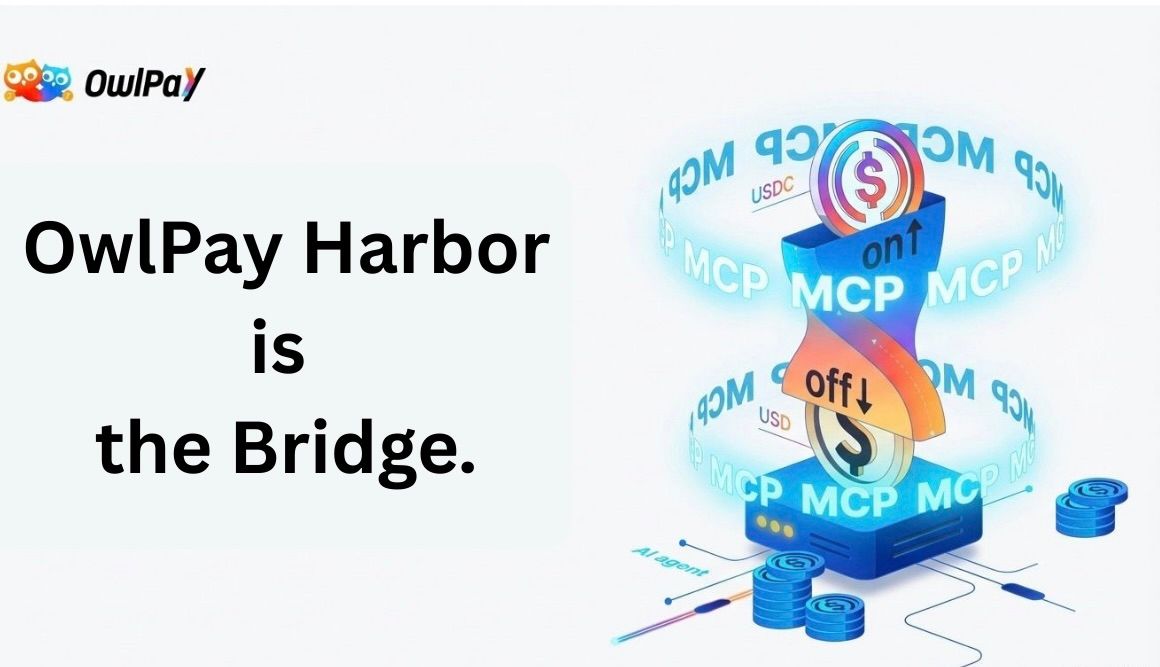
(Images shown are AI-generated. They are for informational and illustrative use only.)